
By meeting mothers and children where they are — physically and emotionally — we help prevent deeper system involvement, support family stability, and strengthen long-term outcomes.
This program is not a mobile extension of DHS. While public agencies focus on eligibility determination and compliance, our mobile outreach model is relational, trauma-informed, and prevention-focused, designed specifically for women and children navigating complex systems.
We provide hands-on assistance with paperwork, documentation, and referrals in a safe, non-governmental setting, reducing fear, barriers, and missed opportunities for stabilization.
Privacy-forward spaces
Child-friendly environments
Trauma-informed pacing
Safety planning baked into intake
Gentle, relational casework instead of bureaucratic processing
Gentle, relational casework instead of bureaucratic processing
Women who experience intimate partner violence (IPV) are four times more likely to experience homelessness than those who do not, reflecting how trauma and instability intersect with barriers like lack of documents, benefits, or safe shelter.
- bloomberg american health initiative
Currently in oregon:
Up to 57% of homeless women report that domestic violence was the immediate cause of their homelessness.
- The RetreatOn a given day in 2016, more than 41,000 adults and children fleeing domestic violence sought emergency shelter or transitional housing, and shelters could not meet thousands of requests due to limited resources.
- An Office of the Administration for Children & FamiliesStudies of homeless populations have found that people experiencing homelessness frequently lack identification, which then limits their ability to apply for employment, housing, or public assistance benefits — and some service providers even require ID before offering help.
- National Law Center on Homelessness & Poverty Trauma Context Is Different
Many women (especially mothers) interacting with DHS systems are navigating:
Domestic violence
Coercive control
Fear of child removal
Shame around asking for help
Past system harm
A women-centered model can:
Reduce fear of engagement
Increase follow-through
Build trust faster
Prevent re-traumatization
That’s a different outcome goal than standard DHS.
The truck.
Grace on Wheels is operated exclusively from a 26-foot mobile service truck that is equipped with intentional safety and security features. The vehicle is well-lit, climate-controlled, camera-monitored on the exterior, and designed with private consultation areas inside.
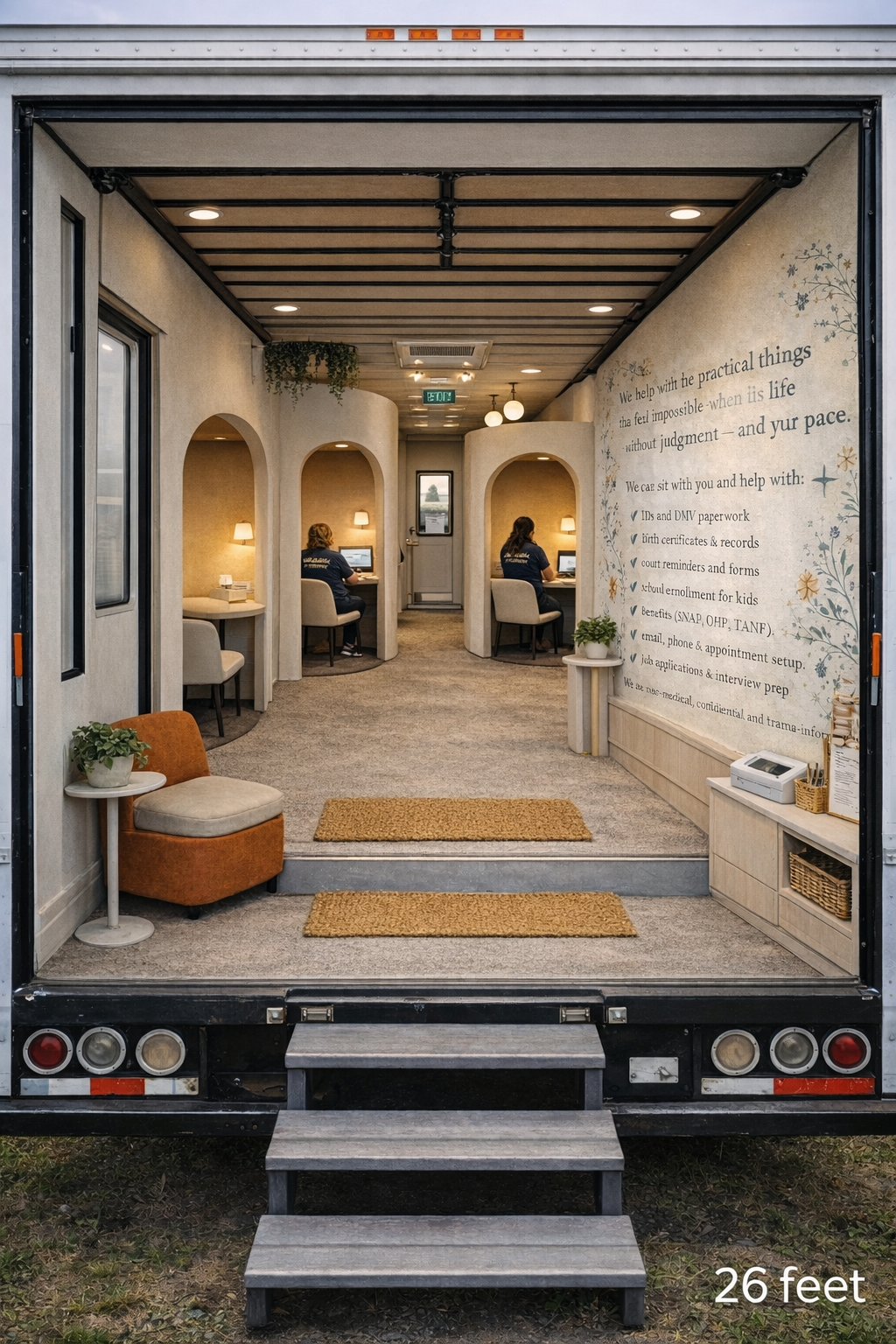
We meet families where they are — in safe community spaces — and sit with them one-on-one, providing navigation support, encouragement, and practical help. Our approach is non-medical, trauma-informed, judgment-free, and gently faith-inspired: rooted in dignity, compassion, and hope.
Other unique challeneges
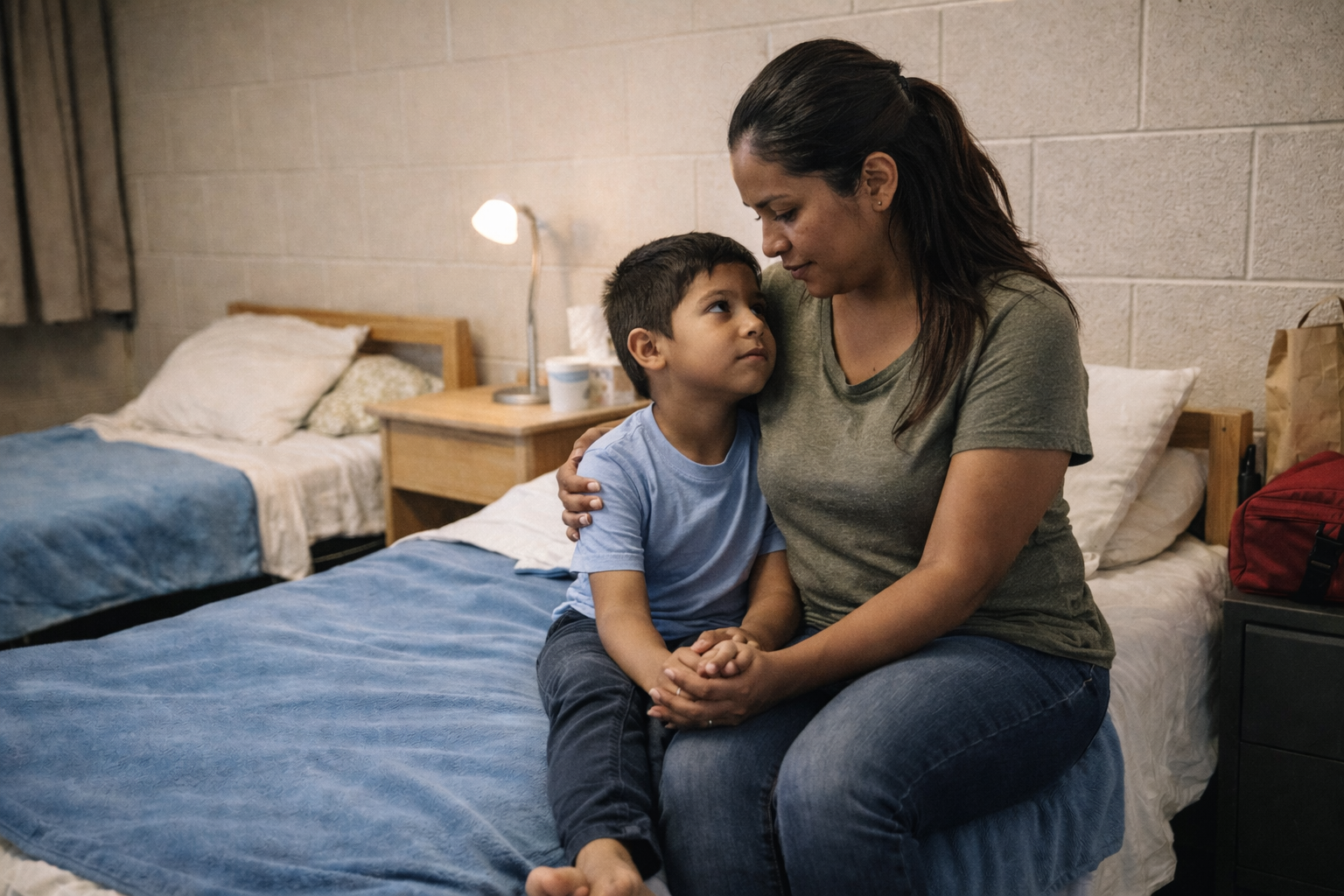
Women and mothers experiencing homelessness face unique challenges:
Lack of childcare, transportation, safety, and privacy
Fear of judgment or losing custody
Trauma, domestic violence histories, and instability
Overwhelming bureaucratic systems
Many remain unhoused not because they lack motivation, but because they lack:
government identification
mailing address
ability to schedule appointments
technology access
someone to walk through the process with them
locations
Bend, Oregon
Grace On Wheels provides mobile outreach and paperwork assistance for women and families in Bend, Oregon, helping with IDs, benefits, court navigation, and job preparation.
Prineville, Oregon
We serve women and children in Prineville, Oregon through mobile navigation services that remove barriers to housing, education, and employment.
Redmond, Oregon
Our mobile support services help unhoused women and families in Redmond, Oregon overcome documentation and system barriers.
La Pine, Oregon
Grace On Wheels meets families in La Pine, Oregon with compassionate, non-medical support focused on stability and hope.